
Director of the Opéra-Comique from 1994 to 2000, Pierre Médecin passed away at the age of 90 on Sunday, 4 January 2026. His passing marks the end of an era in French opera. A director who knew every detail of orchestral scores, this native of Nice was trained by Wieland Wagner at the Bayreuth Festival, where he was his assistant – he made it a point of honour to drive from Nice to Bayreuth while listening to the complete Ring Cycle. A great man of the theatre and a connoisseur of the repertoire, performers and theatre professions, Pierre Médecin embodied rare qualities as a director and stage director, combining knowledge, artistic rigour and profound humanity. He was committed to defending the operatic heritage, promoting creativity and supporting artists, with infectious curiosity and joie de vivre.
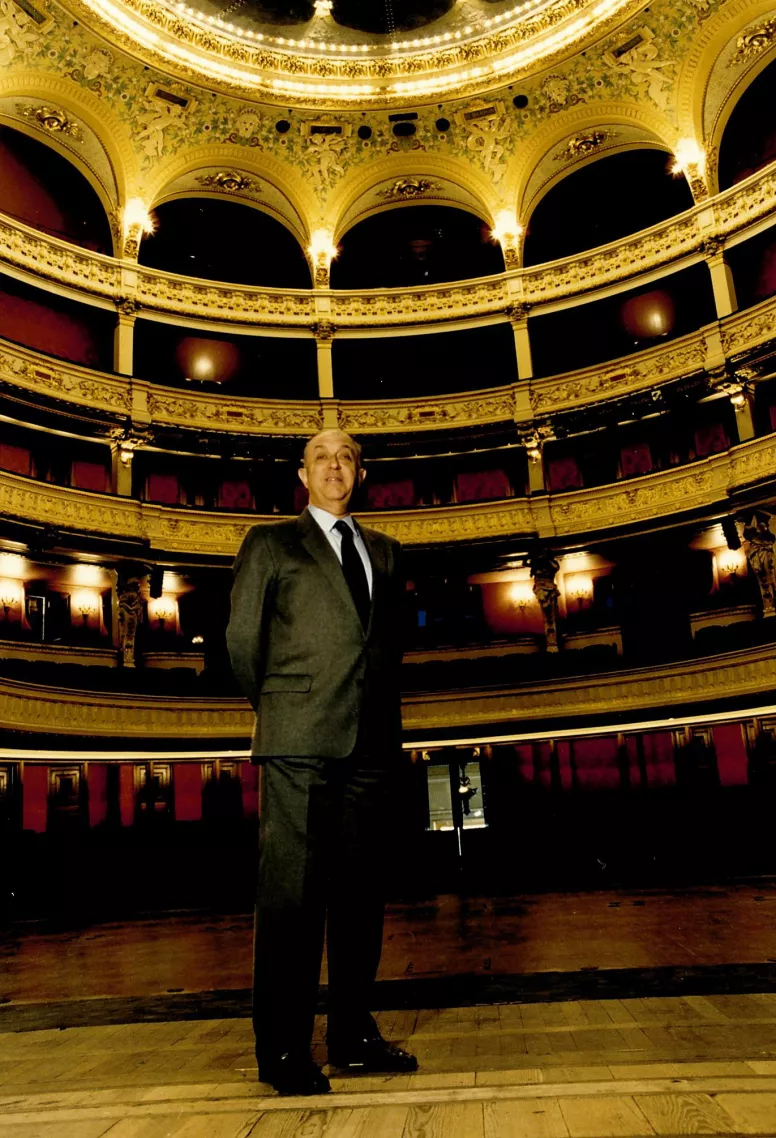
Pierre Médecin DR
In 1996, he founded a troupe of young singers, the JTLF (Jeune Théâtre Lyrique de France), reviving a tradition that had been abandoned for several decades, and Pierre Médecin revitalised the Opéra-Comique with an enlightened programme: among the forty-five productions presented during his seven-year tenure, we remember in particular Roberto Alagna's first Romeo, Natalie Dessay's first Lakmé and François Le Roux's first Golaud in Pelléas et Mélisande under the direction of Georges Prêtre, which he staged on an extraordinary set dripping with water. In 1996, he founded a troupe of young singers, the JTLF (Jeune Théâtre Lyrique de France), thus affirming his desire to pass on his knowledge. Pierre Médecin presented shows such as Don Quichotte chez la duchesse de Boismortier, La Dame blanche by Boieldieu and Vlan dans l'œil by Hervé, as well as new works such as Le dernier jour de Socrate by Graciane Finzi and Clara by Hans Gefors (librettos by Jean-Claude Carrière) and classics of the institution, such as the unforgettable Werther with Alfredo Kraus and Béatrice Uria-Monzon in 1994.
Extremely courteous with the public and deeply attached to the Salle Favart, Pierre Médecin was always attentive to his teams, demanding yet benevolent, with a watchful eye but always a smile on his lips.
His generosity, trust and commitment to both the theatre teams and the artists left a lasting impression on those who had the good fortune and pleasure of working with him, and will continue to nourish the memory of the Opéra-Comique.